
Jan 22, 2026 – By Zenx News
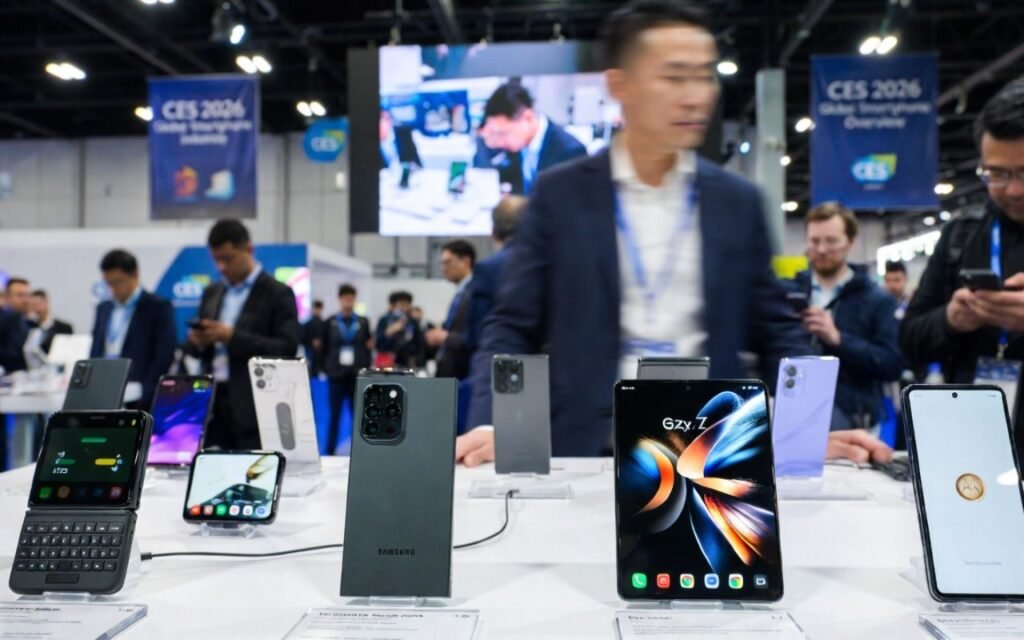
The international mobile phone and smartphone sector is entering 2026 amid a mix of cautious optimism and mounting challenges. Fresh data from leading analysts like Omdia, Counterpoint Research, and DIGITIMES reveals a market that grew modestly in late 2025 but now confronts headwinds from surging memory component prices, AI-driven demand shifts, and evolving consumer preferences. At the same time, CES 2026 showcased groundbreaking foldable designs and AI-integrated devices, signaling that innovation remains the industry’s lifeline despite projected shipment declines.
The global smartphone market closed 2025 on a positive note, with shipments rising 4% year-over-year in Q4, according to Omdia’s latest report released on January 14. Apple secured the top spot for the third consecutive year, overtaking Samsung in annual sales for the first time in over a decade. This shift highlights Apple’s strong performance in premium segments, particularly in China—its largest growth market—where iPhone sales surged dramatically in late 2025.
However, the momentum appears short-lived. Multiple research firms have downgraded 2026 forecasts due to a sharp rise in DRAM and NAND flash memory prices. Driven by explosive demand from AI data centers, these components have seen double-digit quarterly increases, pushing up bill-of-materials (BoM) costs across the board. DIGITIMES revised its global shipment projection downward to 1,202.2 million units for 2026, implying a -1.6% annual decline—the first contraction in years. Counterpoint Research echoes this, forecasting a 2-3% drop, while noting that Apple and Samsung may weather the storm better than mid-tier players like Xiaomi and Transsion, which have slashed their own shipment targets by tens of millions of units.
“This is a classic supply-chain squeeze,” explained a senior analyst from Counterpoint. “Chipmakers are prioritizing high-margin AI infrastructure over consumer devices, leading to shortages and price hikes that will inevitably dampen demand, especially in price-sensitive emerging markets.”
Satellite-to-Cell: The Next Frontier Explodes
One of the brightest spots in the mobile landscape is the rapid ascent of satellite-to-cell services. A new research report published January 22 projects the market ballooning from $3.87 billion in 2025 to $4.49 billion in 2026—a staggering 16.2% CAGR. By 2030, the sector could hit $8.1 billion.
Pioneered by partnerships like Apple with Globalstar, T-Mobile with Starlink (SpaceX), and similar efforts from AST SpaceMobile and Lynk Global, direct-to-device satellite connectivity is moving beyond emergency SOS features. Initial deployments focused on texting in remote areas, but 2026 will see voice calls, data browsing, and even low-bandwidth video in underserved regions.
Governments are accelerating adoption for disaster response and rural connectivity. In aviation, satellite-linked phones are gaining traction for in-flight communication. Major players—Apple, Samsung, Qualcomm, Ericsson, and SpaceX—dominate the competitive field. North America led in 2025, but Asia-Pacific is poised for the fastest growth as operators integrate hybrid bundles.
Challenges remain: spectrum allocation, regulatory hurdles, and high initial device costs. Yet, the promise of true global coverage without dead zones excites investors and consumers alike.
CES 2026: Foldables and AI Take Center Stage
The Consumer Electronics Show in Las Vegas delivered more smartphone surprises than expected this year. While traditionally not a major phone launchpad, CES 2026 featured hands-on demos of several innovative devices.
Samsung stole the spotlight with the Galaxy Z TriFold—a book-style foldable that expands to a massive 10-inch inner display while remaining remarkably slim. Reviewers praised its build quality and multitasking potential, though high pricing limits it to a niche audience for now. Samsung also teased deeper Galaxy AI integrations for the upcoming S26 series, expected in February.
Motorola unveiled its first book-style foldable, the Razr Fold, positioning it as a direct rival to Samsung’s Z Fold lineup. Clicks, known for physical keyboard accessories, surprised everyone by debuting the Communicator—an Android phone with a full BlackBerry-style QWERTY keyboard, interchangeable backs, and retro appeal.
Honor showcased the Magic 8 Pro globally (after a China launch), packing Qualcomm’s Snapdragon 8 Elite Gen 5 chipset and advanced AI agents for photo editing, settings management, and voice commands.
These launches underscore 2026’s dual themes: foldables continue gaining traction (IDC predicts 10% shipment growth, boosted potentially by a rumored foldable iPhone), and AI is becoming table stakes. Android 17 promises richer ecosystems, including better integration with PCs and XR devices.
Android Evolution and Broader Ecosystem Shifts
Google’s Android platform is set for major updates in 2026. The OS will emphasize AI agents—autonomous helpers for tasks like scheduling, editing, and device management. Flagship chips like Qualcomm’s Snapdragon 8 Elite Gen 5 enable on-device processing, reducing latency and enhancing privacy.
Mid-range devices also shine: Xiaomi’s Redmi Note 15 series launched early January with strong battery life and efficient processors, targeting budget-conscious buyers in emerging markets.
Yet, economic pressures loom. Rising component costs could delay upgrades, particularly in developing regions. Brands are responding with financing models, ecosystem perks (like bundled services), and localized AI features to justify premiums.
Mobile App Business: AI, Security, and Global Expansion
Beyond hardware, the app economy evolves rapidly. Experts predict 2026 as the year AI tools become ubiquitous in mobile marketing, personalization, and user engagement. Emerging markets in Southeast Asia, Latin America, Africa, and Eastern Europe drive growth, with users embracing localized content and payment methods.
Security remains critical: The global mobile application security market is forecast to reach $7 billion by 2033, fueled by rising cyber threats. Enterprises in finance, healthcare, and government prioritize threat defense, encryption, and secure testing.
E-learning apps explode thanks to mobile-first platforms and immersive tech, while finance apps in Europe explore cross-border expansions amid open banking trends.
Outlook: Resilience Through Innovation
The smartphone industry in early 2026 balances headwinds and opportunities. Memory shortages and cost pressures may shrink shipments, but satellite connectivity, foldable breakthroughs, and AI differentiation offer fresh growth avenues. Apple and Samsung’s premium strength contrasts with challenges for volume players, while global partnerships push boundaries in coverage and intelligence.
As CES dust settles and MWC approaches in February, the sector watches closely. Will AI features convince consumers to upgrade despite higher prices? Can satellite services democratize connectivity? One certainty: the mobile world refuses to stand still.