
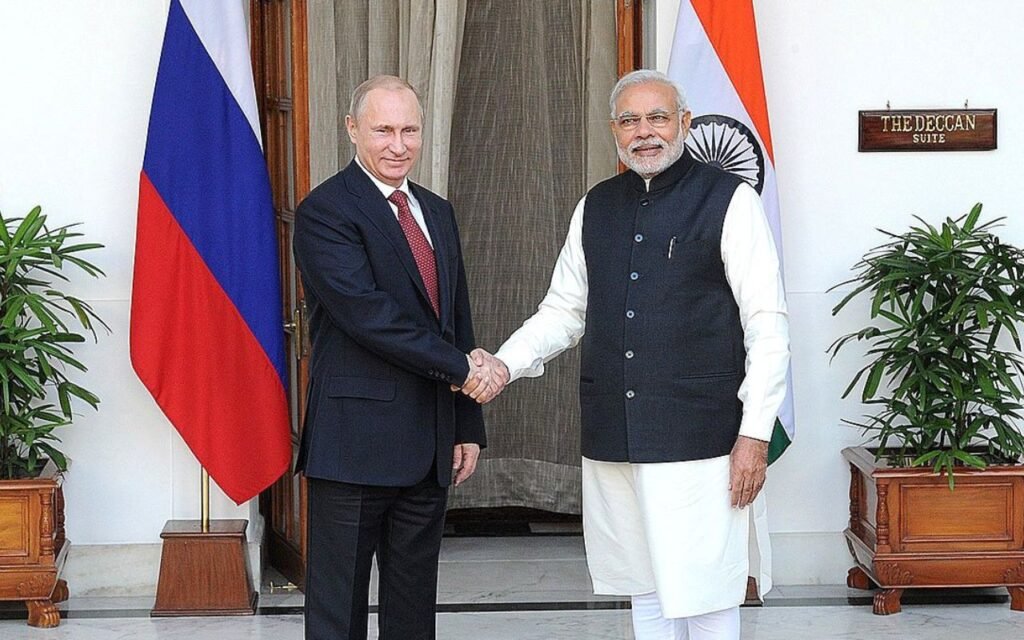
Image Source: Wikimedia Commons
December 26, 2025 – ZenX News Desk
As the global economic order continues to shift in the wake of geopolitical tensions, supply chain realignments, and evolving trade alliances, India and Russia are preparing to recalibrate their bilateral trade strategy for 2026. Long-standing political ties and economic cooperation between the two nations are now entering a new phase shaped by pragmatism, diversification, and resilience.
Trade discussions between New Delhi and Moscow indicate a clear intent to move beyond traditional sectors and create a more balanced, future-oriented economic partnership. With both countries facing pressure from global market volatility and external trade restrictions, the focus in 2026 is expected to be on stability, local currency trade mechanisms, and expanded sectoral cooperation.
A Relationship Rooted in Strategic Trust
India and Russia share decades of diplomatic and economic engagement, historically driven by defense, energy, and industrial cooperation. Over the years, Russia has been a key supplier of defense equipment and energy resources to India, while India has emerged as a reliable market and strategic partner for Russian exports.
In recent years, however, the trade relationship has undergone noticeable changes. Global sanctions, logistical challenges, and shifting demand patterns have forced both sides to rethink traditional trade routes and financial systems. As a result, 2026 is being viewed as a consolidation year—one focused on creating sustainable and sanction-resistant trade frameworks.
Trade Volume and Imbalance: A Key Policy Focus
One of the central challenges facing India–Russia trade policy is the growing imbalance in trade volumes. India’s imports from Russia, particularly crude oil, coal, and fertilizers, have risen sharply, while Indian exports have grown at a slower pace.
For 2026, policymakers on both sides are expected to address this imbalance by encouraging Russian imports of Indian goods and services. Pharmaceuticals, agricultural products, textiles, engineering goods, and information technology services are likely to feature prominently in India’s export push.
Russian trade planners have shown interest in sourcing affordable, high-quality pharmaceutical products and processed food items from India, especially as domestic demand continues to rise. Indian exporters, meanwhile, are seeking clearer regulatory pathways and improved logistics to access Russian markets more effectively.
Energy Trade Remains Central—but More Structured
Energy cooperation will remain the backbone of India–Russia trade in 2026, but with a more structured and risk-managed approach. India has emerged as a major buyer of Russian crude oil, leveraging competitive pricing and long-term supply arrangements.
Trade policy discussions suggest that both sides are working toward more predictable pricing mechanisms, improved shipping insurance solutions, and alternative payment systems to reduce exposure to external disruptions. There is also growing interest in long-term energy contracts that provide stability for both suppliers and buyers.
Beyond oil, cooperation in nuclear energy and natural gas infrastructure is expected to continue, with a focus on technology sharing and joint project development.
Local Currency Trade and Payment Systems
One of the most significant elements of the 2026 trade framework is the increased use of local currencies for bilateral trade. India and Russia have already experimented with rupee–ruble settlements, and policymakers are expected to refine these mechanisms further.
Using local currencies is seen as a way to reduce dependency on third-country financial systems and mitigate transaction risks. In 2026, banks and trade institutions in both countries are likely to expand settlement infrastructure, improve exchange rate transparency, and encourage exporters to adopt these systems.
However, challenges remain, including currency volatility and limited convertibility. Trade officials acknowledge that while local currency trade is not a complete replacement for traditional systems, it is becoming an important complementary tool.
New Sectors Gain Policy Attention
While traditional sectors remain important, 2026 trade policy is expected to prioritize diversification. Several emerging areas are gaining attention:
Technology and Digital Cooperation
India’s strength in software, IT services, and digital solutions aligns with Russia’s demand for technology-driven modernization. Joint ventures, technology licensing, and digital infrastructure cooperation are being discussed as part of long-term trade planning.
Pharmaceuticals and Healthcare
Indian pharmaceutical companies are exploring expanded manufacturing and distribution partnerships in Russia. Trade facilitation measures, including regulatory harmonization and faster approvals, are likely to be key policy areas in 2026.
Agriculture and Food Processing
With food security becoming a global concern, agricultural trade is emerging as a strategic priority. India’s expertise in food processing and Russia’s agricultural capacity create opportunities for collaboration in storage, logistics, and value-added exports.
Logistics and Connectivity: A Policy Priority
Efficient logistics remain one of the biggest hurdles in India–Russia trade. The International North–South Transport Corridor (INSTC) is expected to play a critical role in 2026, offering a shorter and potentially more cost-effective route for goods movement.
Trade policy discussions emphasize improving port connectivity, customs coordination, and digital tracking systems. Faster transit times and reduced logistics costs are seen as essential for making bilateral trade more competitive.
Private Sector Participation and SMEs
Another major policy shift in 2026 is the increased emphasis on private sector and small and medium enterprises (SMEs). Until now, much of India–Russia trade has been driven by large state-owned or multinational entities.
Policymakers are now encouraging greater participation from SMEs by simplifying trade procedures, providing market intelligence, and facilitating business-to-business engagement. Trade fairs, virtual expos, and sector-specific delegations are expected to increase.
Geopolitical Context Shapes Trade Decisions
India’s trade policy with Russia in 2026 is being shaped carefully to balance strategic autonomy and global engagement. India continues to maintain strong economic ties with Western economies while preserving its long-standing partnership with Russia.
This balancing act requires diplomatic sensitivity and economic pragmatism. Indian policymakers are focusing on national interest, energy security, and economic stability, while avoiding overdependence on any single partner.
Russia, for its part, sees India as a reliable long-term partner in Asia and an important gateway to emerging markets.
Challenges Ahead
Despite positive momentum, several challenges remain:
- Currency settlement complexities
- Insurance and shipping constraints
- Regulatory differences
- Market access limitations
Both governments acknowledge that overcoming these challenges will require consistent dialogue, institutional support, and private sector confidence.
Looking Ahead: What 2026 May Bring
As 2026 approaches, India–Russia trade policy appears set to evolve from necessity-driven cooperation to a more structured and diversified partnership. The emphasis is shifting toward sustainability, mutual benefit, and resilience against external shocks.
If successfully implemented, the 2026 trade framework could strengthen economic ties while offering businesses on both sides new opportunities for growth. For India, the strategy supports energy security and export diversification. For Russia, it ensures access to a large, growing market and a dependable economic partner.
In a world marked by uncertainty, the India–Russia trade relationship in 2026 reflects a broader trend toward adaptive partnerships built on long-term strategic alignment rather than short-term gains.